Induction cooktops are common in modern kitchens, yet many home cooks are unsure how they differ from gas or electric hobs. Here is a plain-language guide.
How induction works
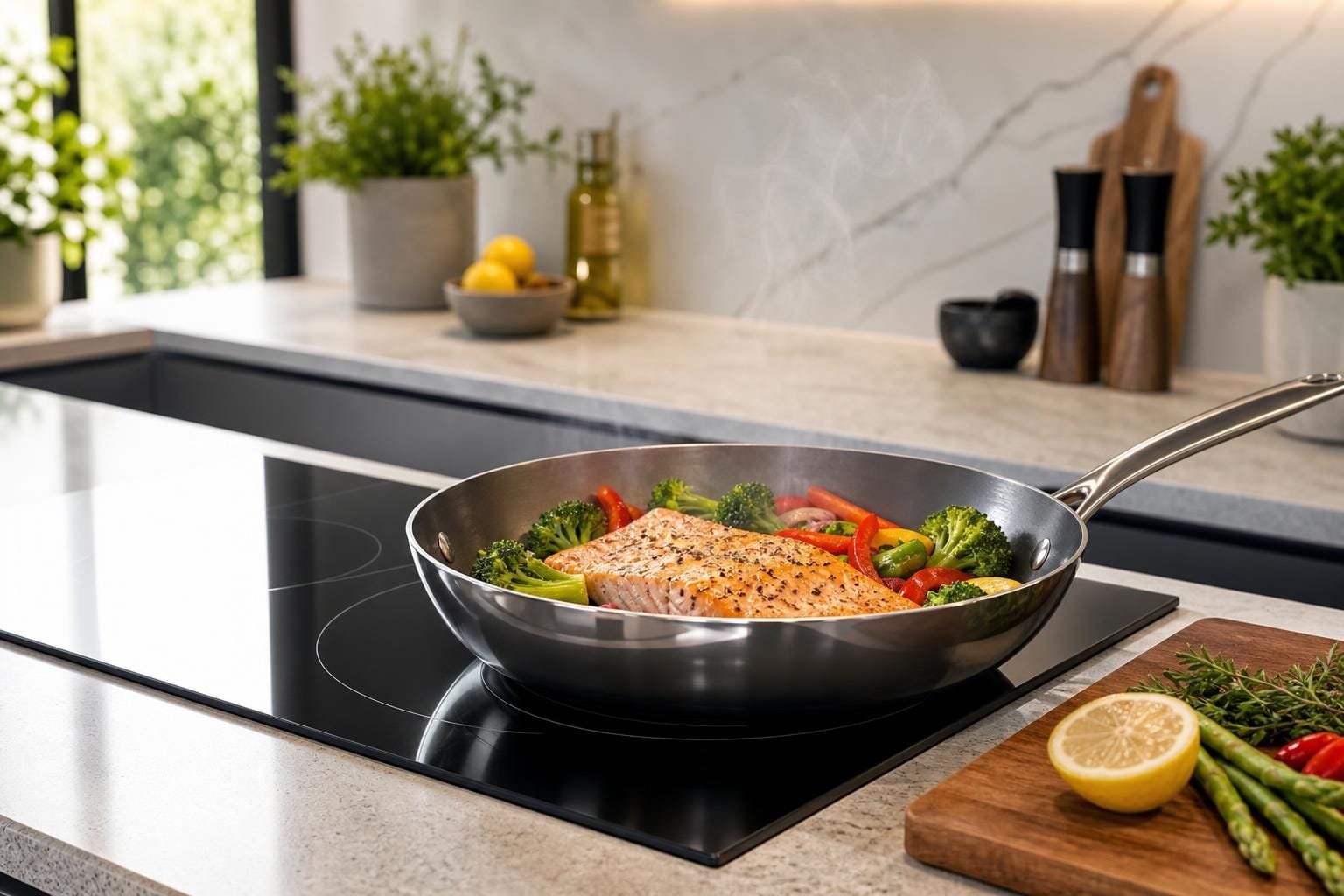
Instead of heating a flame or a coil, an induction cooktop creates a magnetic field that heats the pan itself. The surface stays cooler than with other methods, and heat responds quickly when you change the setting.
Benefits
- Fast, precise control for simmering and searing.
- Easier cleaning because spills do not bake onto a hot surface.
- Safer operation as most units switch off when a pan is removed.
Things to consider
- Cookware: pans must be magnetic. A simple test is to see whether a magnet sticks to the base.
- Power supply: check your home wiring and the unit’s requirements before buying.
- Noise: some pans hum or buzz at high power.
Portable or built-in?
A single portable induction plate is an inexpensive way to try the technology, especially in small kitchens or rented homes. Built-in hobs suit people renovating a kitchen.
Is it worth it?
If you value quick heating, safety and easy cleaning, induction is a strong choice. If your cookware is not magnetic and you cook rarely, a portable unit is a low-risk start. Learn the science on Wikipedia’s induction cooking page, and see how it fits with other smart kitchen appliances.