Meal prep has a reputation for being a Sunday-long chore involving dozens of identical boxes. It does not have to be. A light, flexible system can save you time on busy evenings, reduce takeaway spending and cut food waste. This guide walks you through a beginner-friendly routine you can start this week.
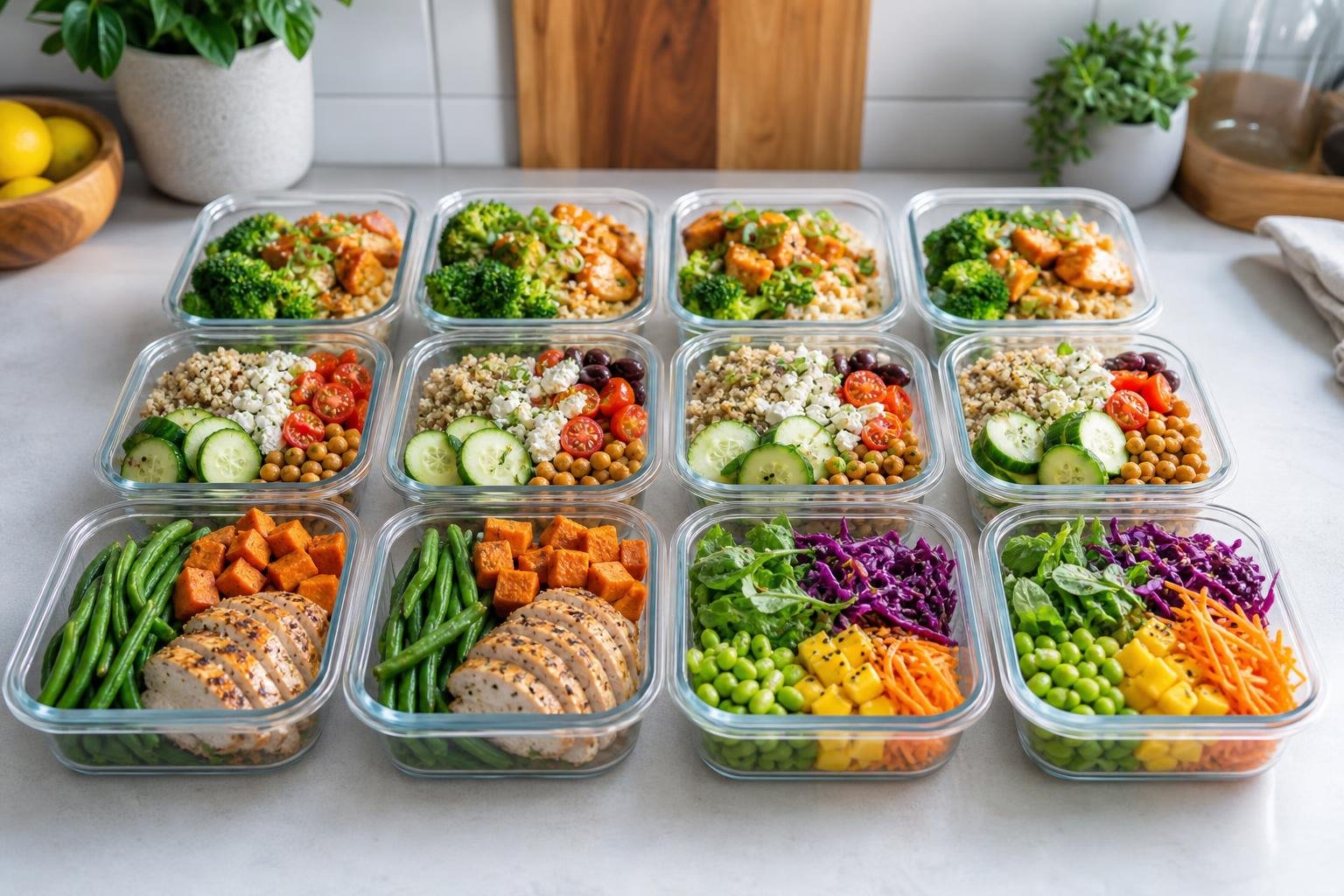
Why meal prep works
Most of us do not skip healthy meals because we dislike them. We skip them because at 7pm we are tired and have nothing ready. Meal prep removes that decision. When a balanced meal is already waiting in the fridge, the easy choice becomes the good choice.
Step 1: Start small
Do not prep every meal for seven days. Begin with three or four lunches or dinners. Once the habit feels natural, add breakfasts or snacks. Small wins keep you going, and burnout is the main reason people quit.
Step 2: Use the “1-2-3” building block
Think in components instead of fixed recipes:
- One base: rice, quinoa, millet, pasta or roasted potatoes.
- Two proteins: for example lentils and paneer, chickpeas and chicken, or eggs and tofu.
- Three vegetables: one roasted, one raw or quick-pickled, one cooked in a sauce.
Mixing and matching these components gives you variety without cooking ten separate dishes.
Step 3: Write a short shopping list
Plan your meals first, then check what you already own. A shared notes app or a list on your phone works well. Our article on useful foodie apps covers tools that make this easier.
Step 4: Cook in an efficient order
- Start the slowest item first, such as a pot of rice or lentils.
- Put vegetables in the oven or air fryer while the base cooks.
- Chop raw items and prepare sauces while everything cooks.
- Let food cool slightly before packing it into containers.
An air fryer is useful here because it cooks vegetables and proteins quickly with little attention.
Step 5: Store food safely
Cool cooked food promptly and refrigerate it in airtight containers. As a general rule, many cooked dishes keep well in the fridge for a few days, and you can freeze extra portions for later. Always follow the food safety guidance in your country, and reheat food until it is steaming hot all the way through. The World Health Organization’s food safety fact sheet is a good general reference.
Choosing containers
- Glass containers do not stain and are easy to reheat in, but they are heavier.
- Good plastic containers are lightweight and stack well. Check they are labelled microwave safe.
- Keep sauces and crunchy toppings in small separate pots so meals do not go soggy.
Common mistakes to avoid
- Prepping too much variety: three recipes are plenty to start.
- Skipping flavour: prepare a couple of sauces or chutneys so reheated food does not taste flat.
- Ignoring your own schedule: if Sundays do not work, prep midweek instead.
Frequently asked questions
Is meal prep only for weight loss?
No. It is a time and money saver for anyone, whatever their goals. If you track what you eat, see our guide to tracking meals without the stress.
Can I prep without a lot of equipment?
Yes. A good knife, a chopping board, a couple of pans and some containers are enough.
Final thoughts
The best meal prep routine is the one you can repeat. Start with a few simple meals, use flexible building blocks and keep food safety in mind. Within a few weeks, you will probably wonder how you managed without it.
Written by Prakash Attur at TechEatsByPS, where we cover practical kitchen technology, food tech and honest buying advice.
Keep reading: Our Top Picks | More Buying Guides | Smart Kitchen Gadgets | AI Tools