The kitchen is one of the busiest energy users in many homes. The good news is that you can cut waste without giving up good food. A mix of simple habits and a few smart gadgets can make a noticeable difference to your bills and your footprint.
1. Match the appliance to the job
Heating a full-size oven for a small portion is rarely efficient. A compact appliance often does the job using less energy:
- An air fryer or small oven for small portions.
- A microwave for reheating.
- A lid on the pot so food comes to temperature faster.
2. Boil only what you need
Fill the kettle with the amount of water you actually need. Boiling extra water and letting it cool is a small but daily waste.
3. Consider induction
Induction cooktops heat the pan directly, which means less heat escapes into the room. If you are renovating or replacing a hob, read our guide to induction cooking.
4. Use smart plugs to find hidden usage
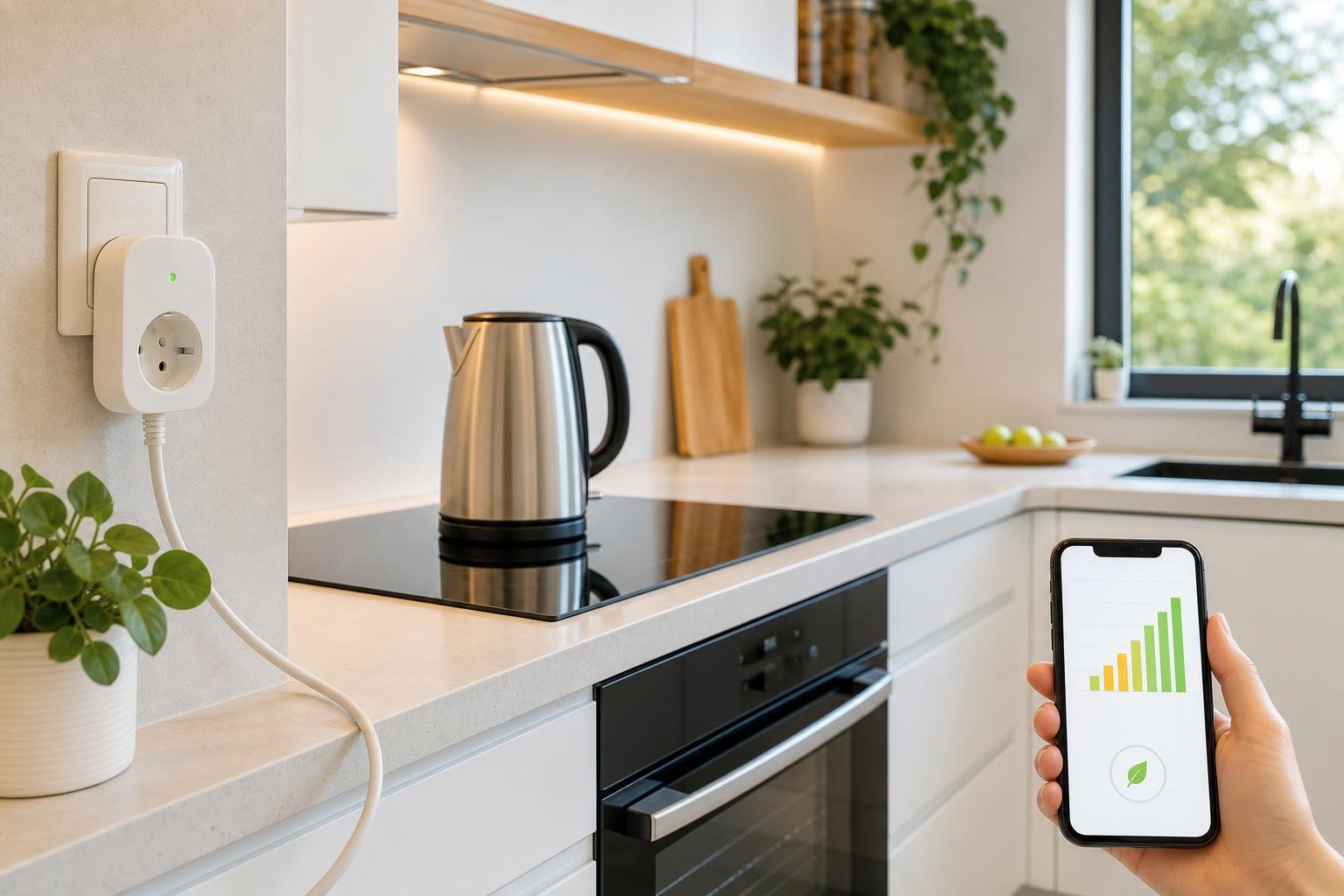
Many smart plugs include an energy monitor. Plug an appliance in and the companion app shows how much power it uses. This is useful for finding out which devices are costing you the most, or are quietly drawing power while idle. You can also schedule plugs to switch off at night.
A word of caution: do not put high-power heating appliances on a smart plug unless the plug is rated for that load. Check the plug’s maximum rating and follow the manufacturer’s instructions.
5. Keep the fridge and freezer efficient
- Keep door seals clean and check they close properly.
- Do not put hot food straight in. Let it cool first.
- Keep the fridge reasonably full but not overcrowded, so air can circulate.
- Defrost the freezer if ice builds up.
6. Waste less food, waste less energy
Every item thrown away also wastes the energy used to grow, transport and cook it. Our posts on cutting food waste and zero-waste technology show practical ways to start.
7. Use the dishwasher wisely
Run full loads and use eco programmes where available. Scrape rather than pre-rinse unless your manufacturer recommends otherwise.
8. Check the energy label when buying
When replacing an appliance, compare energy ratings and running costs, not just the purchase price. A cheaper model that uses more power can cost more over its lifetime. The US Department of Energy’s Energy Saver guide has general advice, and your local energy agency may have region-specific guidance.
A simple starter plan
- Fit a smart plug with an energy monitor on one or two appliances.
- Change your kettle and lid habits this week.
- Check your fridge seals and temperature.
- Review the results after a month and decide what to upgrade.
Final thoughts
You do not need to rebuild your kitchen to use less energy. Small changes made consistently usually matter more than one big purchase. Start with the easiest habits, measure what you can, and upgrade only where it makes sense.
Written by Prakash Attur at TechEatsByPS, where we cover practical kitchen technology, food tech and honest buying advice.
Keep reading: Our Top Picks | More Buying Guides | Smart Kitchen Gadgets | AI Tools