Sous vide, French for “under vacuum”, is a cooking method once limited to professional kitchens. Today, compact immersion circulators make it possible at home. But is it worth the money and counter space? Here is an honest look at how it works, who it suits and what to expect.
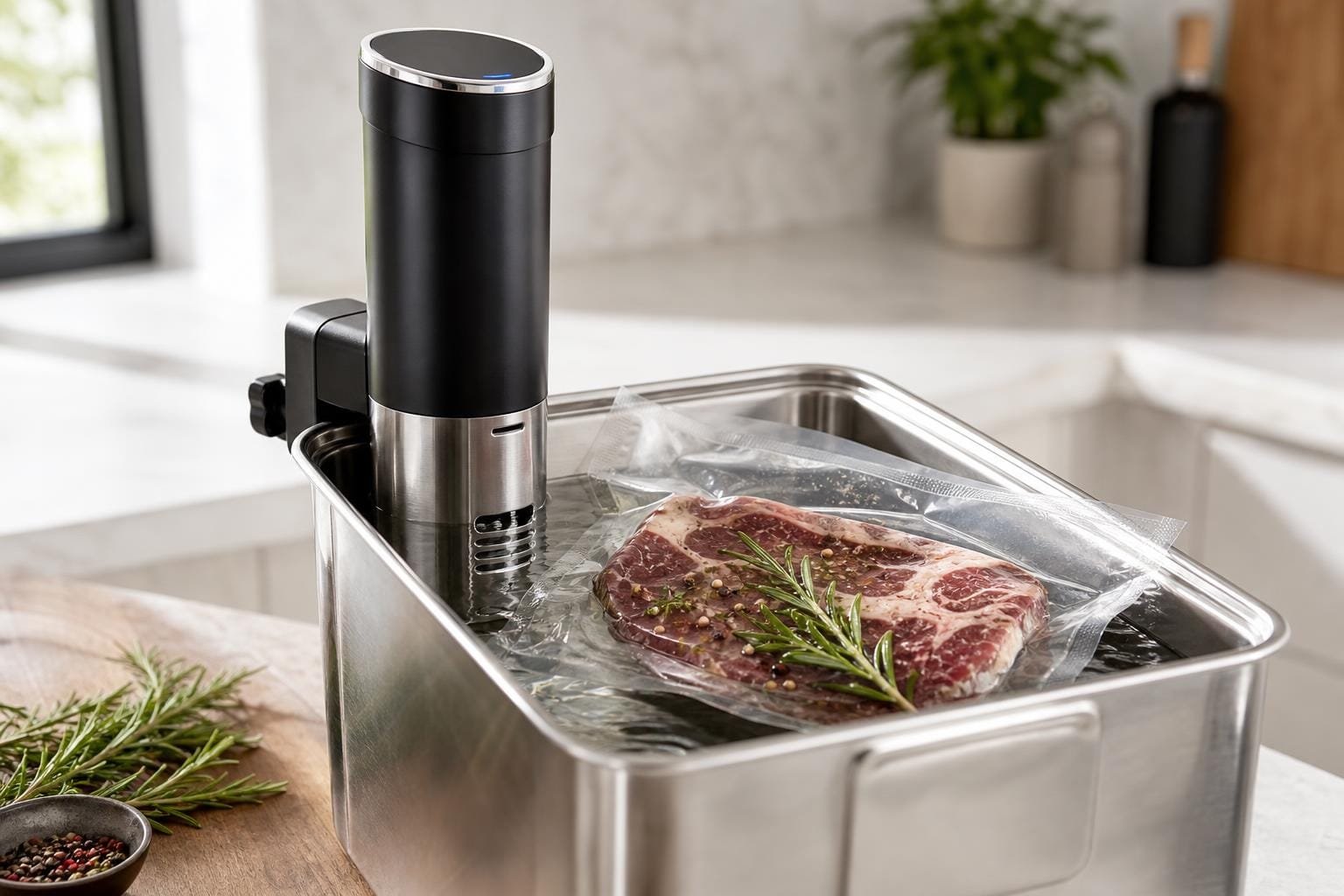
How sous vide works
Food is sealed in a bag and cooked in a water bath held at a precise, constant temperature. Because the water never gets hotter than your target, the food cannot easily overcook. A steak set to your preferred doneness will be that doneness edge to edge, rather than grey at the outside and pink in the centre.
What you need to get started
- An immersion circulator: a stick-shaped device that heats and circulates the water.
- A container: a large pot or a food-safe plastic tub with enough water to cover the food.
- Bags: heavy-duty zip bags work using the water displacement method, or you can use a vacuum sealer.
- A pan or torch: sous vide meat often needs a quick sear afterwards for colour and flavour.
What it does best
- Tender cuts of meat and fish: consistent doneness every time.
- Eggs: silky, repeatable textures.
- Tough cuts: long, gentle cooking can make them very tender.
- Batch cooking: food can wait in the water without overcooking for a reasonable window.
What it does not do well
- It is slow, so it does not suit last-minute meals.
- Food does not brown in the bag, so you need a finishing step.
- It takes planning, since you need to think ahead.
Food safety matters
Sous vide often uses lower temperatures than traditional cooking, so time and temperature both matter for safety. Follow trusted guidance for your specific food rather than guessing. The US government food safety site and your local food safety authority are good places to check. Take extra care with poultry, pork and anything for young children, older people or pregnant women.
Is it worth it?
Sous vide is worth considering if you:
- enjoy cooking and like precise, repeatable results;
- often cook steak, fish, chicken breast or eggs;
- like to prepare food ahead for guests or for weekly meal prep.
You can probably skip it if you cook mostly quick one-pan meals, have very limited storage, or dislike planning ahead. For many people, a good air fryer or an induction cooktop gives more everyday value.
Tips for first-time users
- Start with eggs or chicken breast to learn the process.
- Pat food dry before searing for a better crust.
- Use a lid or cover to reduce evaporation in long cooks.
- Cool and refrigerate or freeze leftovers promptly.
Final thoughts
Sous vide is not a magic trick, but it gives reliable, restaurant-style results with little guesswork. If you enjoy kitchen gadgets and plan ahead, it can be a rewarding addition. If not, there is no shame in sticking with simpler tools.
Written by Prakash Attur at TechEatsByPS, where we cover practical kitchen technology, food tech and honest buying advice.
Keep reading: Our Top Picks | More Buying Guides | Smart Kitchen Gadgets | AI Tools