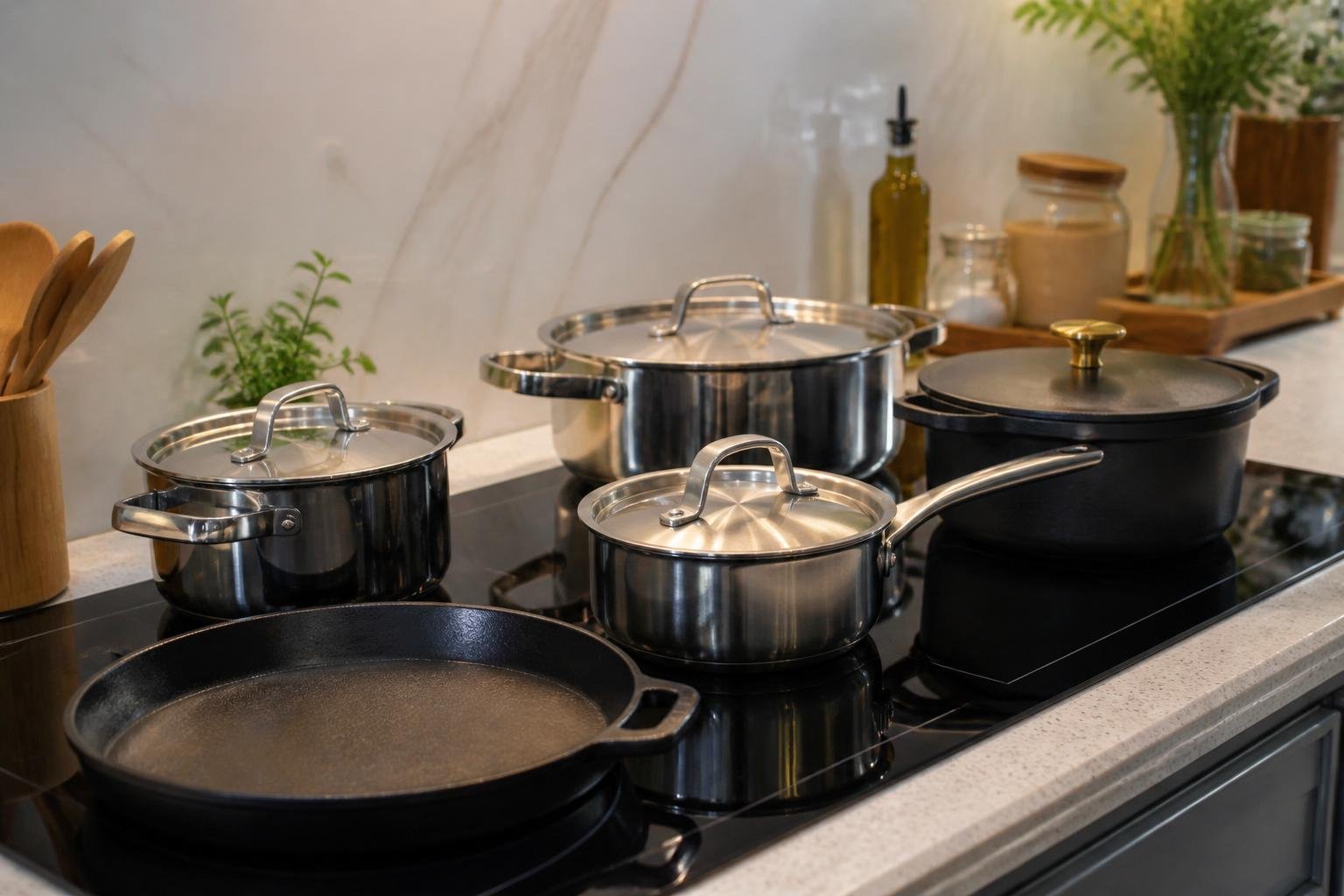
An induction cooktop only heats cookware that reacts to magnetism. That means some of your existing pots will work and some will not. Here is how to choose well. If you are still deciding on the cooktop itself, read Induction Cooking Explained.
The 10-second magnet test
Hold a fridge magnet to the bottom of the pan. If it sticks firmly, the pan will work on induction. If it is weak or does not stick, it will not heat properly.
Cookware types compared
| Type | Works on induction? | Good for | Notes |
|---|---|---|---|
| Magnetic stainless steel (tri-ply) | Yes | Curries, boiling, everyday cooking | Even heating, long lasting |
| Cast iron | Yes | Dosa tawa, searing, slow cooking | Heavy; lift it, do not drag it |
| Carbon steel | Yes | Stir fry, tawa | Needs seasoning |
| Induction-base non-stick | Yes (check label) | Eggs, dosa, low-oil cooking | Avoid high heat and metal spoons |
| Aluminium, copper, glass | No, unless they have an induction base | Gas only | Look for a bonded steel disc |
What to check before buying
- Flat, thick base: a warped base heats unevenly and may rattle.
- Base size: at least 12 cm across so the cooktop detects it.
- Induction-compatible label and a magnet that sticks.
- Handles: riveted, heat-resistant and secure.
- Weight: heavier pans hold heat better but are harder to handle.
A sensible starter set for an Indian kitchen
- One tri-ply stainless kadai for curries and frying
- A cast iron or induction tawa for rotis and dosa
- A medium saucepan for tea, milk and boiling
- An induction-base pressure cooker
- One non-stick pan for eggs and light cooking
Care tips
- Lift, do not slide, pans across the glass surface.
- Do not preheat an empty non-stick pan on high.
- Wipe spills right away so they do not burn on.
FAQ
Can I use a flat-bottom steel pressure cooker?
Only if it is labelled induction compatible or passes the magnet test.
Cooktop acting up? See 8 common fixes for an induction cooktop that is not heating.