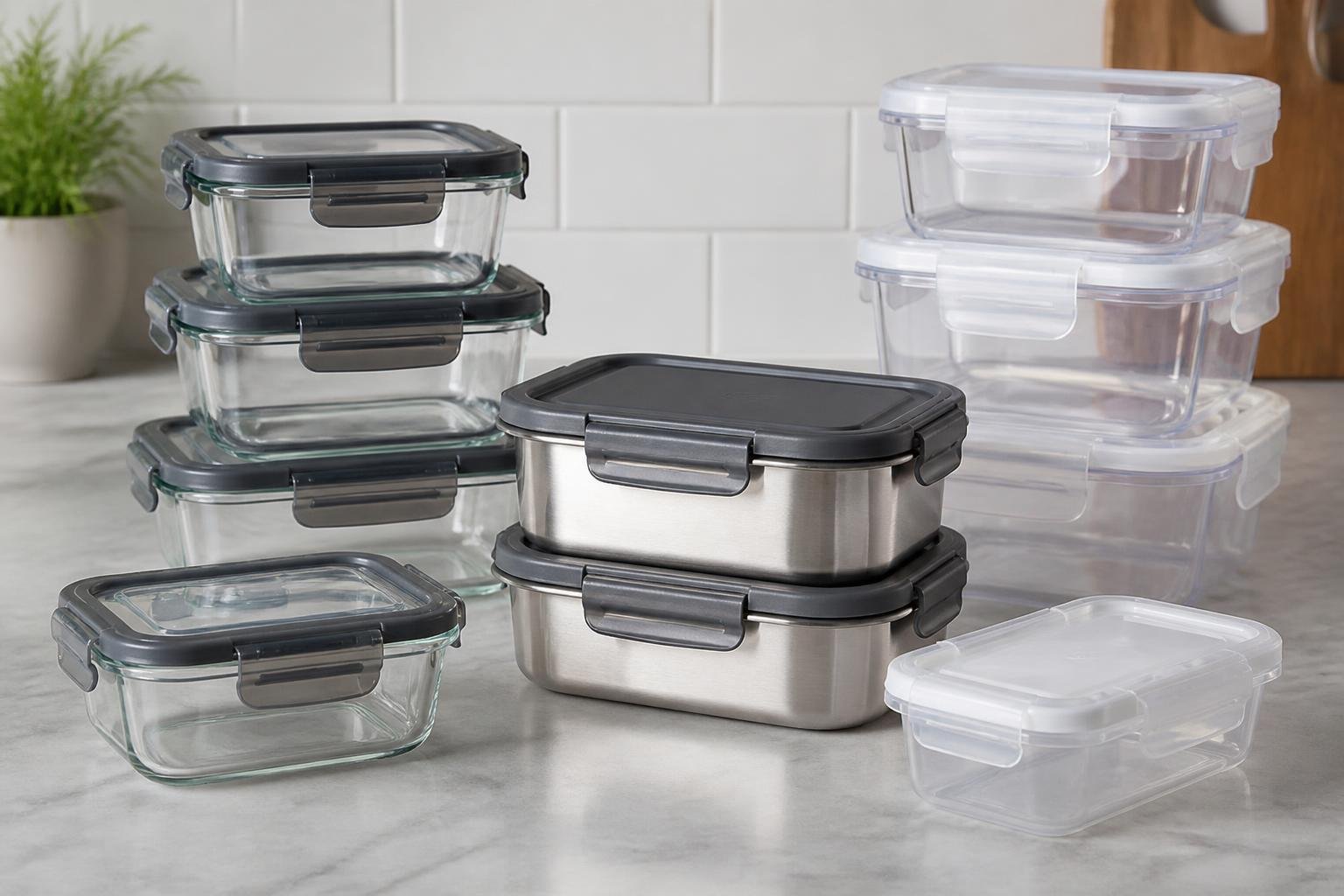
The right containers make meal prep easier and food safer. Each material has strengths and weaknesses, so many kitchens use a mix. Here is how they compare.
Side-by-side
| Glass | Stainless steel | Plastic | |
|---|---|---|---|
| Microwave safe | Yes (check lid) | No | Only if labelled |
| Oven safe | Often yes (without lid) | Often yes | No |
| Stains and smells | Resists | Resists | Absorbs turmeric and tomato |
| Weight | Heavy | Medium | Light |
| Breakage | Can break | Durable | Durable, can warp |
| Price | Medium to high | Medium to high | Low |
Best choice by use
- Meal prep and leftovers at home: glass. You can see the food and reheat in the same box.
- Lunch boxes and travel: stainless steel for durability, or lightweight leak-proof plastic.
- Dry storage: plastic or glass jars for dal and snacks.
- Freezer: freezer-safe plastic or tempered glass, leaving headspace.
Plastic safety tips
- Choose BPA-free, food-grade plastic and check for microwave-safe labelling.
- Avoid heating oily food in old, scratched plastic.
- Replace boxes that are cracked, warped or smelly.
What to look for
- Locking lids with silicone seals
- Stackable shapes that fit your fridge
- Dishwasher-safe parts
Pair good containers with a plan: our 7-day Indian meal prep plan, and check safe storage times.