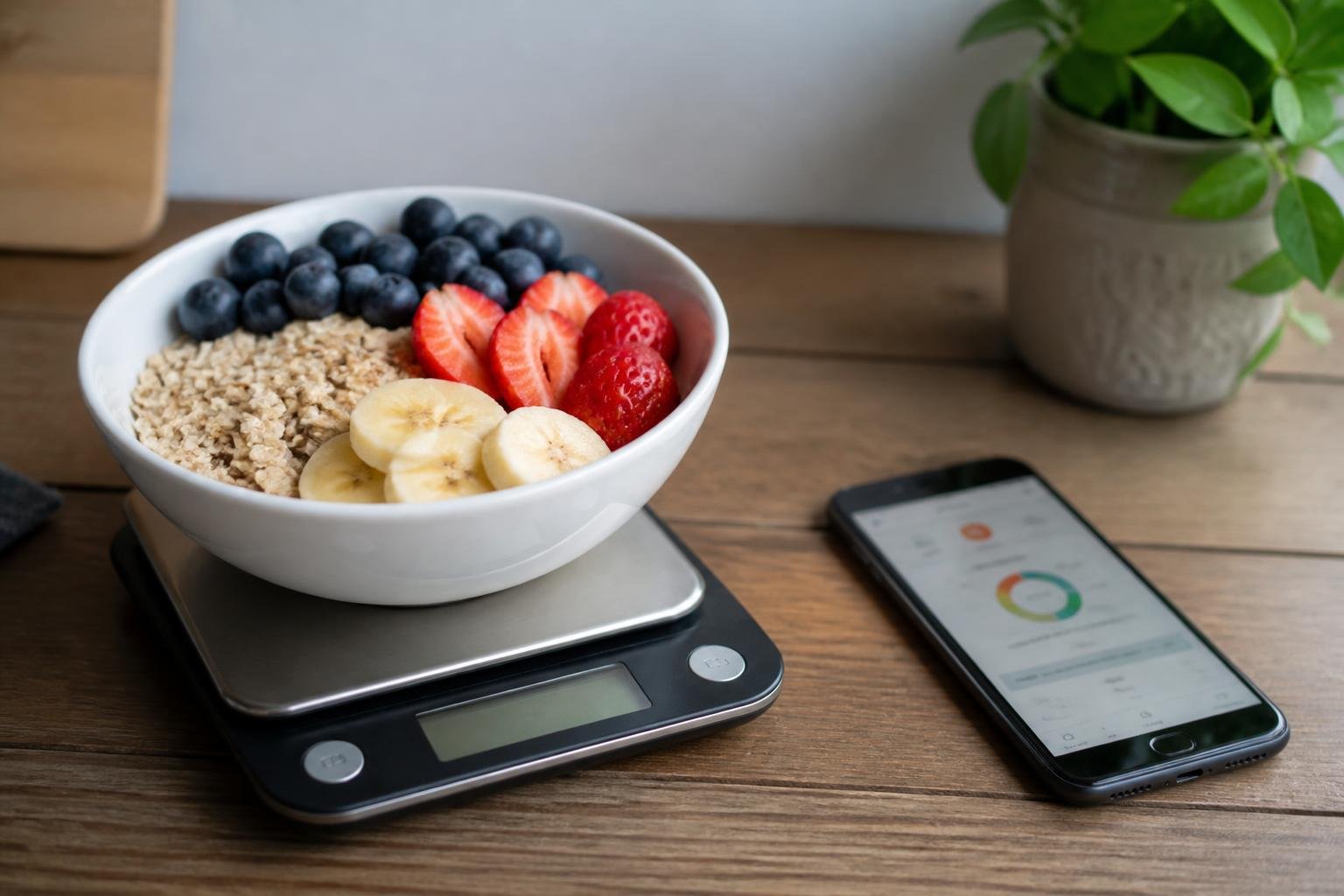
Measuring cups are fine for baking, but they are a poor way to track what you eat. A kitchen scale takes seconds and removes the guesswork. This guide explains what to look for so you buy the right one. It pairs well with our guide on tracking meals without the stress.
Why weigh food?
Portions are easy to misjudge. One person’s cup of rice can be twice another’s. Weighing gives repeatable numbers that match the data in nutrition apps, and it often reveals that portions are smaller or larger than expected.
Features that matter
| Feature | What to look for | Why |
|---|---|---|
| Accuracy | 1 g steps (0.1 g for spices) | Reliable small portions |
| Capacity | 5 kg or more | Handles heavy bowls |
| Tare button | Required | Zero out the bowl |
| Units | g, oz, ml | Matches recipes and apps |
| Power | USB rechargeable or long battery life | No dead scale mid-recipe |
| Surface | Flat, easy to wipe | Hygiene |
Do you need a smart scale?
Bluetooth scales send weights to an app and can look up nutrition automatically. They are convenient if you track daily. A simple scale plus a free tracking app works well too and costs less. Choose smart only if you will actually use the app.
How to weigh food properly
- Place the empty bowl on the scale and press tare.
- Add the first ingredient and note the weight.
- Press tare again and add the next ingredient in the same bowl.
- Weigh raw ingredients where possible, since cooked weights change with water.
Tips to avoid obsessing
- Weigh for two weeks to learn your usual portions, then check occasionally.
- Focus on the foods that matter most, such as oil, rice, nuts and snacks.
- Use tracking as information, not judgement.
FAQ
How accurate is a cheap scale?
Many budget scales are accurate to within a few grams, which is enough for meals. Test yours with a known weight like a packaged item.
Also see 10 smart kitchen gadgets under Rs 2,000 and our 7-day Indian meal prep plan.