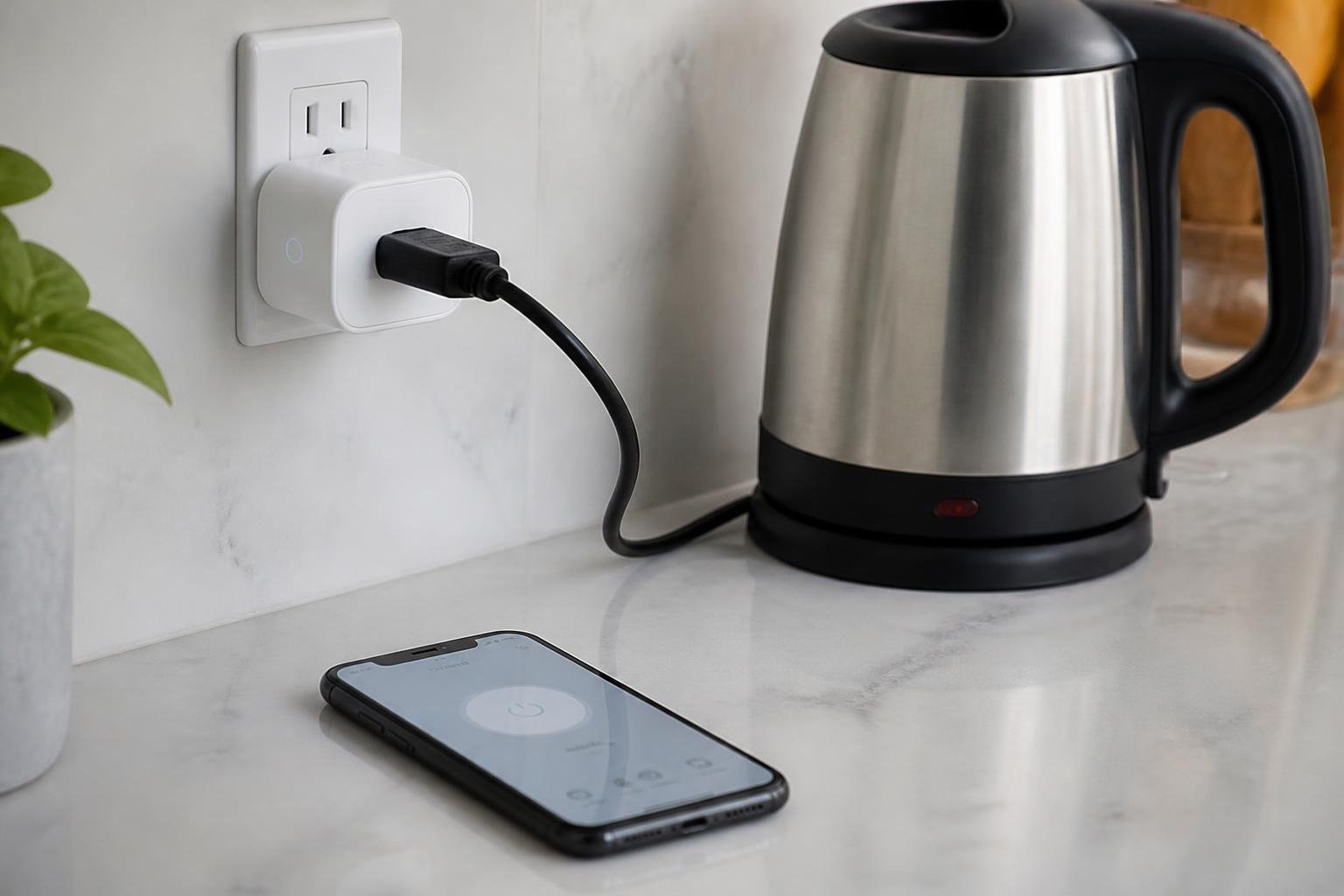
A smart plug lets you switch an appliance on and off from your phone or a schedule. In a kitchen that sounds handy, but heat and high power make safety important. This guide explains what to check and which appliances suit a smart plug. It builds on our kitchen energy guide.
Step 1: check the amp rating
Compare the appliance wattage (on its label) with the plug rating. Amps × volts gives watts, so a 10A plug on 230V handles about 2,300W. Kettles, geysers and induction cooktops draw a lot, so choose a plug rated for 16A when the appliance needs it. Never exceed the rating.
Good uses
- Coffee machines and slow cookers with a physical switch left on
- Lamps and under-cabinet lights
- Rice cookers that keep the switch down and stay safe to run
- Energy monitoring on a fridge or microwave to learn real usage
Use with caution
- Electric kettles: only if the plug is rated for the load, and never rely on remote start for an empty kettle.
- Air fryers and toasters: do not start them remotely, since food and fire risk require you to be present.
Do not automate
- Induction cooktops, gas-related devices and any heating appliance left unattended
- Appliances whose manual forbids extension or timer use
- The refrigerator, because power cuts caused by a mistake can spoil food
Simple automations that help
| Automation | Benefit |
|---|---|
| Turn off the coffee machine at 10 pm | Stops standby use |
| Slow cooker timer | Meal ready when you return |
| Usage alerts | Spot a failing appliance |
Buying checklist
- Correct amp rating and BIS-marked product
- Works with your Wi-Fi (2.4 GHz) and your voice assistant
- Energy monitoring if you want usage data
- Flame-retardant casing
FAQ
Do smart plugs use power themselves?
Yes, a small amount, usually under 1 W.
See other budget ideas in 10 smart kitchen gadgets under Rs 2,000.