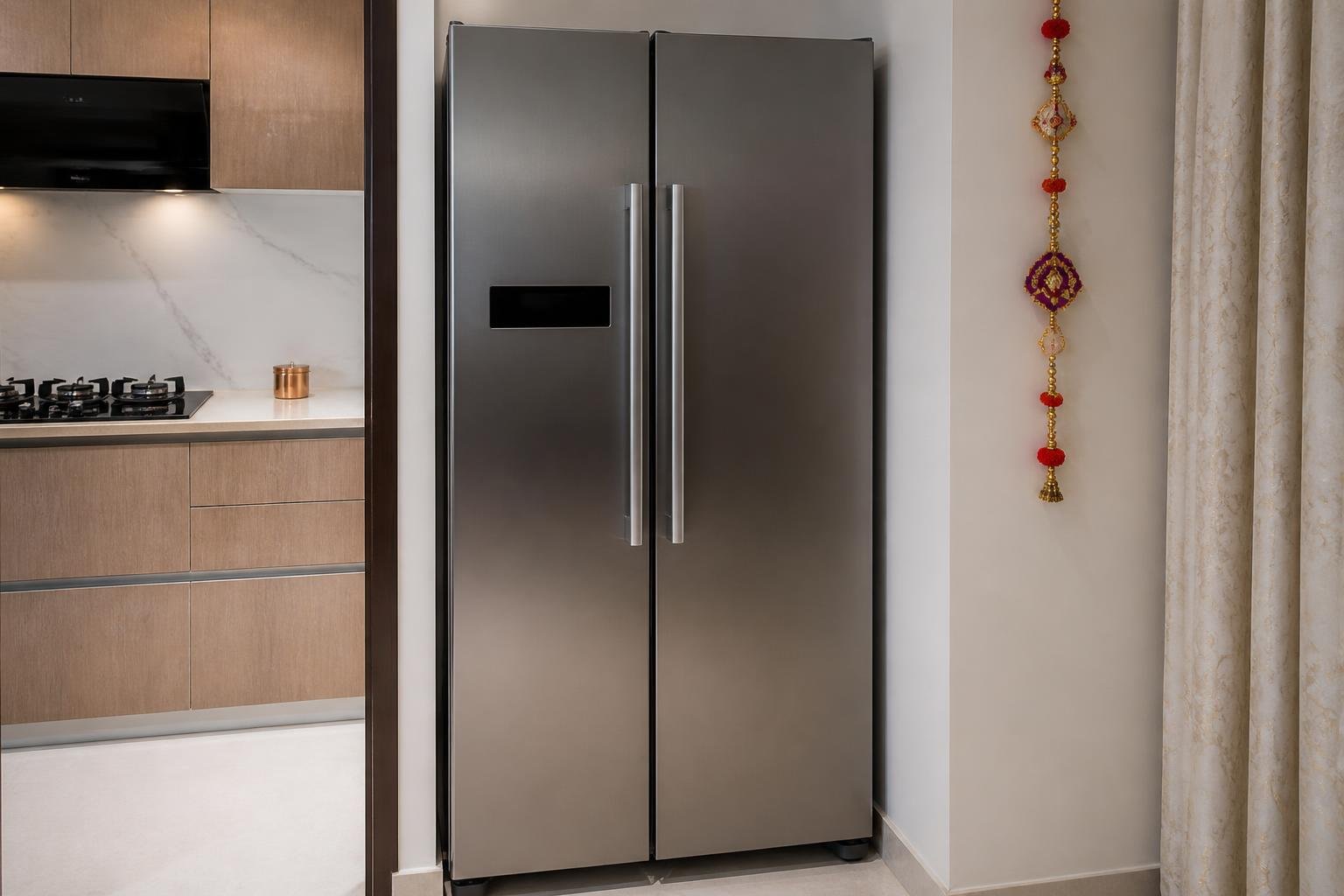
A fridge runs 24 hours a day for ten years or more, so the choice affects your power bill as well as your convenience. Here is a simple way to decide between single and double door models.
Quick comparison
| Single door | Double door | |
|---|---|---|
| Best for | 1 to 3 people, small kitchens | 3 to 6 people, frequent bulk buying |
| Freezer | Small, inside the fridge | Separate, larger |
| Defrosting | Usually manual (direct cool) | Usually automatic (frost free) |
| Price | Lower | Higher |
| Power use | Often lower at equal rating | Slightly higher, but better insulated |
How much capacity do you need?
- Up to 2 people: about 100 to 200 L
- 3 to 4 people: about 250 to 350 L
- 5 or more, or bulk storage: 350 L and above
These are rules of thumb. Add space if you store cooked food, batter or large vegetables regularly.
Energy ratings
Check the BEE star label. More stars means less electricity per year at the same size. Compare the annual units (kWh) printed on the label, then multiply by your rate per unit to estimate yearly cost.
Features worth paying for
- Inverter compressor: adjusts cooling, runs quieter and saves power
- Frost free: no manual defrosting
- Stabiliser-free operation if your area has voltage swings
- Good vegetable crisper and adjustable shelves
Using it well
- Set the fridge at 4°C or below.
- Keep a gap behind it for airflow.
- Do not store hot food. Cool it first.
Storage questions? See how long cooked food lasts in the fridge.
CategoryBuying Guides