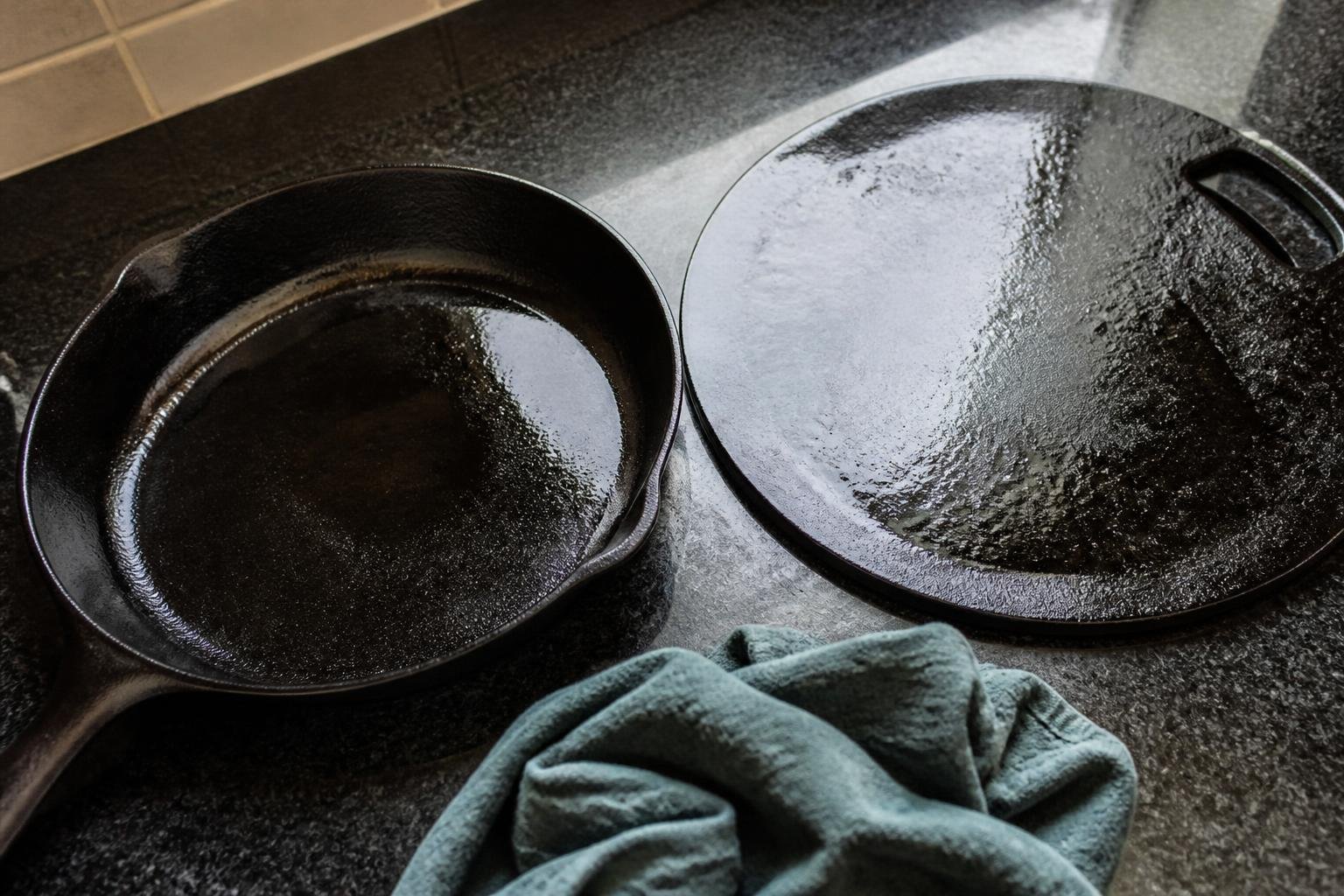
Cast iron lasts for decades and works well on gas and induction. It just needs seasoning, which is a thin layer of baked-on oil that makes it naturally non-stick and protects it from rust. Here is how to do it. If you cook on induction, see our induction cookware guide.
Seasoning a new pan
- Wash with warm water and a little soap to remove factory coating. Dry completely on a low flame.
- Apply oil. Rub a very thin layer of a high smoke point oil (such as sunflower or groundnut) over the entire pan, inside and out.
- Wipe it almost off. The pan should look dry, not greasy, or it will turn sticky.
- Bake. Place upside down in an oven at about 200 to 230°C for 1 hour, with a tray below to catch drips. Let it cool inside.
- Repeat two to three times for a stronger coating.
No oven? Heat the oiled pan on a medium flame until it smokes lightly, let it cool, and repeat a few times.
Daily care
- Clean while warm with hot water and a soft brush or scraper.
- Use mild soap sparingly. A little will not ruin seasoning.
- Dry immediately on low heat and wipe a few drops of oil on the surface.
Fixing common problems
| Problem | Fix |
|---|---|
| Rust spots | Scrub with steel wool, wash, dry and re-season |
| Sticky surface | Too much oil. Bake it hot to harden, or scrub and re-season thinly |
| Food sticking | Preheat well, use enough oil, and keep seasoning regularly |
| Flaking | Scrape loose bits and re-season |
What to avoid
- Soaking in water or using the dishwasher
- Long cooking of acidic food such as tamarind or tomato in a new pan
- Sliding heavy pans on glass cooktops
Cast iron makes excellent dosa and roti tawas, and it is a great partner for weekly meal prep.