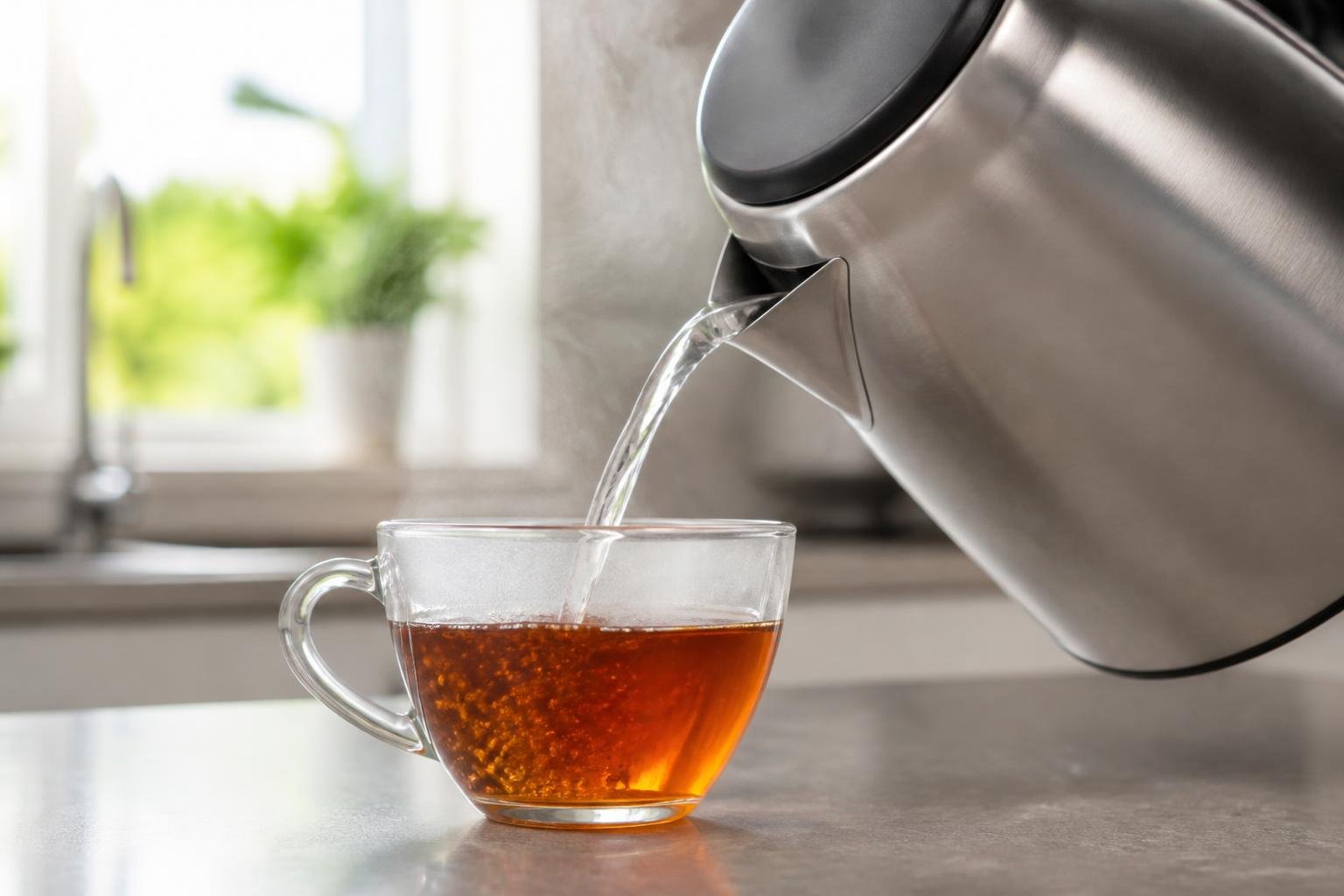
An electric kettle is cheap, quick and used every day, so a good one is worth a little research. The main things to compare are material, capacity, power and safety.
Material compared
| Material | Pros | Cons |
|---|---|---|
| Stainless steel | Durable, no plastic taste, easy to clean | Outside gets hot unless double-walled |
| Glass | See the water level, no taste | Can break, shows scale |
| Plastic | Light and low cost | May affect taste, less durable |
Prefer food-grade stainless steel on the inside and a body that stays cool to touch if you have children.
Capacity and power
- 1 to 1.2 L: one or two people
- 1.5 to 1.8 L: families
- 1,500 to 2,000 W: boils quickly. Higher wattage uses more power for less time, so energy per litre is similar.
Safety features to insist on
- Auto shut-off when water boils
- Boil-dry protection if the kettle is empty
- Lid lock and a cool-touch handle
- BIS marking and a proper 3-pin plug
Nice-to-have features
- Temperature control for tea and coffee
- Keep-warm mode
- Wide mouth for cleaning
Cleaning scale
Fill with water and a little vinegar or citric acid, boil, leave 20 minutes, then rinse well. Do this every month if your water is hard.
Using a kettle with a smart plug
Kettles draw a lot of power, so read Smart Plugs in the Kitchen before automating one.
CategoryBuying Guides