A vacuum sealer removes air from a bag before sealing it. That simple idea can keep food fresher in the freezer, make marinating faster and help with portioning. Before you buy one, here is what to know.
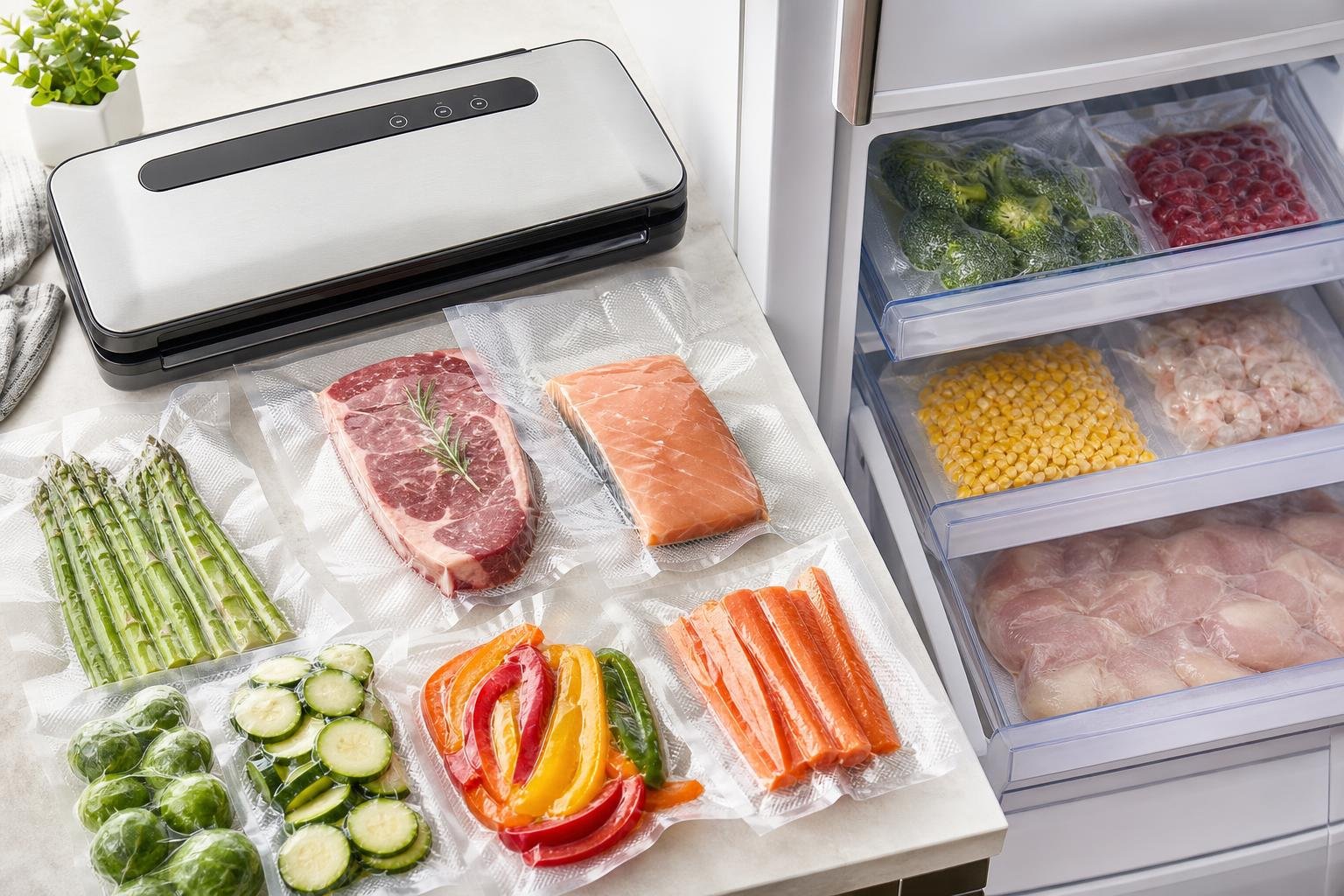
What a vacuum sealer is good for
- Freezer storage: removing air helps reduce freezer burn, so food keeps its quality for longer.
- Bulk buying: split large packs into meal-size portions.
- Marinating: some models have a marinate mode that speeds up flavour absorption.
- Sous vide: sealed bags work well in a sous vide water bath.
- Dry goods: keep items like rice, nuts and spices away from air and moisture.
Types of vacuum sealers
External (edge) sealers
The most common type for homes. You place the open end of a bag in the machine, which pulls out the air and seals it. They are compact and affordable, and suit most households.
Chamber sealers
Larger and more expensive, these place the whole bag in a chamber. They handle liquids such as soups well, and are more often used by serious enthusiasts and small businesses.
Handheld sealers
Small and cheap, designed for special zip bags. They are fine for light use but not as strong as a countertop machine.
Features worth looking for
- Moist and dry modes: help with different foods.
- Pulse control: stops delicate foods from being crushed.
- A bag cutter and roll storage: lets you make custom-size bags.
- Easy-clean drip tray: important when sealing moist foods.
- Bag availability: check that replacement bags are easy to find and fairly priced.
Safety: vacuum sealing is not a preservation shortcut
Removing air slows some kinds of spoilage, but it does not make food safe on its own. Perishable foods still need refrigeration or freezing, and some bacteria can grow without oxygen. Follow guidance from a trusted authority such as FoodSafety.gov, and do not rely on vacuum sealing alone for long-term room-temperature storage of low-acid foods.
Tips for better results
- Freeze liquids like soup or sauce in a tray first, then seal the frozen blocks.
- Leave enough bag length to re-seal after opening.
- Label bags with the contents and date.
- Keep the sealing strip clean and dry.
- Lay bags flat in the freezer to save space.
Is it worth buying?
If you buy in bulk, batch cook or freeze a lot, a vacuum sealer can pay for itself by reducing waste. It pairs well with a meal prep routine and with efforts to cut food waste. If you rarely use the freezer, you can probably skip it.
Final thoughts
A basic external sealer covers most home needs. Focus on reliable sealing, easy cleaning and affordable bags, and treat it as a freshness tool rather than a safety guarantee.
Written by Prakash Attur at TechEatsByPS, where we cover practical kitchen technology, food tech and honest buying advice.
Keep reading: Our Top Picks | More Buying Guides | Smart Kitchen Gadgets | AI Tools